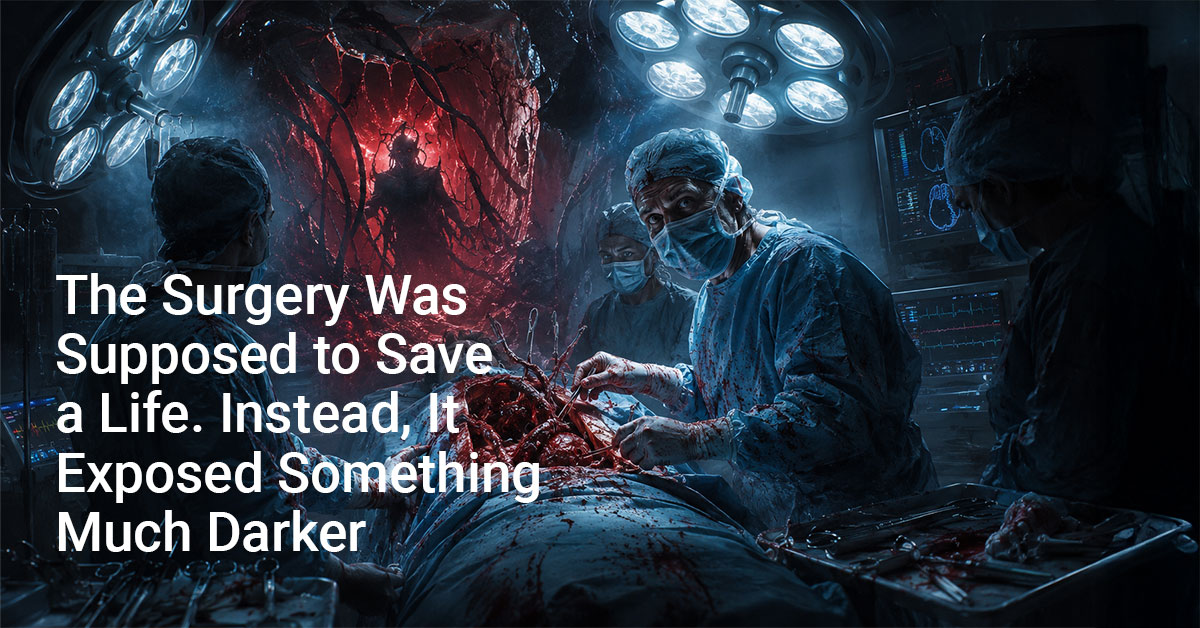
The Surgery Was Supposed to Save a Life. Instead, It Exposed Something Much Darker
Some thrillers give you a few hours of entertainment. Others leave you staring at the ceiling afterwards, wondering how much of the story could actually happen in real life. The Vena Protocol, Book One: First Blood by AAG Zacheriel belongs firmly in the third category.
At first glance, the novel appears to be a nuanced medical thriller centred around a surgeon, a failed medical device, and a corporate conspiracy. But beneath the surface, it operates as something much more ambitious: an examination of what happens when healthcare becomes inseparable from financial engineering.
What makes the novel remarkable is not merely the conspiracy itself, but how believable the world feels. Nothing in The Vena Protocol relies on exaggerated science fiction tropes or cinematic impossibilities. Instead, it builds its tension through systems already familiar to modern society, such as private equity, healthcare procurement, institutional bureaucracy, regulatory pressure, data manipulation, and information asymmetry.
That realism is what gives the story its power. The novel creates a quiet sense that the failed surgery is only the surface of something far larger, keeping readers curious about how deep the conspiracy actually goes.
A Story Built on Systems, Not Villains
The protagonist, Lena Vasik, is not written as a conventional action hero. She is disciplined, emotionally controlled, and deeply competent. As a vascular surgeon at St. Dunstan’s Hospital in London, she believes in process, evidence, and professional responsibility.
That belief begins to fracture after a routine bypass surgery turns catastrophic.
When the Vena graft ruptures during surgery and kills her patient, Edward Calder, Lena initially suspects a manufacturing defect. But what follows is far more disturbing. Hidden inside Calder’s belongings is evidence suggesting the device manufacturer, Caduceus Therapeutics, deliberately manipulated clinical trial data to hide dangerous complication rates.
This is where the novel distinguishes itself from traditional thrillers.
The enemy is not a single corrupt executive operating in isolation. The enemy is a network of aligned incentives.
Everyone within the system appears to be doing their job. Regulators follow procedure, hospitals trust approved suppliers, investors pursue returns, executives protect valuations, and clinicians rely on published data. Yet despite everyone following the rules, patients still suffer.
That institutional realism makes the conspiracy feel frighteningly plausible. And as Lena digs deeper into the origins of the Vena graft, the story slowly reveals that the danger may not stop with one defective device.
The Most Dangerous Idea in the Book
At the centre of The Vena Protocol is one deeply uncomfortable concept:
What if survival itself becomes an asset class?
The book repeatedly explores the idea that healthcare is no longer driven purely by ethics or medicine, but by economic optimisation.
The Vena graft is not simply a medical device. It becomes a financial instrument connected to investment funds, insurance structures, and speculative market positions.
One of the novel’s most compelling revelations involves the concept of “catastrophe arbitrage,” where powerful financial actors profit not only from the success of a healthcare product, but also from its eventual collapse.
In other words, failure itself becomes monetised.
That concept elevates the novel from a corporate thriller into a much broader commentary on modern capitalism.
Why the Writing Works
AAG Zacheriel writes with unusual restraint.
The prose is clinical, measured, and intelligent. Scenes unfold with procedural precision rather than dramatic excess. Operating theatres, boardrooms, datasets, and legal structures are described with the same level of detail and seriousness.
That stylistic choice matters because it reinforces the world of the novel.
The writing never begs the reader to feel shocked.
Instead, it presents the machinery of institutional power calmly and allows the implications to speak for themselves.
This creates a tone that feels closer to a confidential briefing than a traditional thriller.
The result is immersive.
More Relevant Than Comfortable
What ultimately makes The Vena Protocol memorable is how close it feels to reality.
The story touches on issues already shaping the modern world, including rising healthcare privatisation, pharmaceutical lobbying, predictive medicine, algorithmic decision-making, and the financialisation of public systems.
The novel asks readers to confront a difficult possibility:
If medicine, data, and finance continue converging, who ultimately decides the value of a human life?
That question lingers throughout the book.
And unlike many thrillers, The Vena Protocol does not offer easy comfort by the end. While certain individuals are exposed and punished, the broader system remains intact. The incentives that created the conspiracy still exist.
That ending feels deliberate.
The novel is not arguing that corruption is the exception.
It suggests corruption may be the natural outcome of systems built around profit without sufficient accountability.
Final Thoughts
The Vena Protocol is not a casual weekend thriller.
It is a sharp, intellectually driven novel that combines medicine, finance, ethics, and institutional politics into a story that feels disturbingly possible.
For readers who enjoy intelligent conspiracy fiction in the vein of Michael Crichton, John le Carré, or contemporary geopolitical thrillers, this book delivers something genuinely different.
Its greatest strength comes from how believable the world feels, as though the future it describes may already be quietly unfolding around us.